📄 Base64 Encoder / Decoder
Encode or decode Base64 text and files instantly with fast, accurate results.
How to use
Last updated: a year ago
Step-by-Step Guide to Using the Base64 Encoder / Decoder
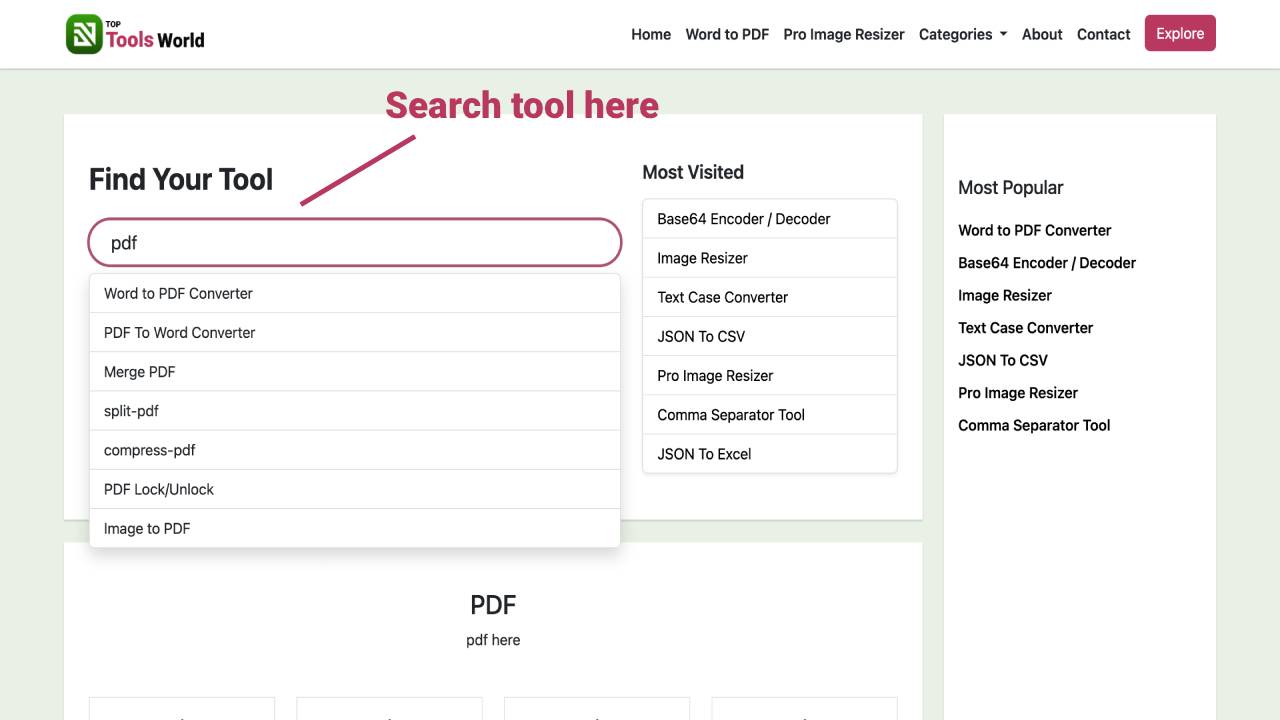
- Open the Base64 Encoder / Decoder on Top Tools World. You’ll see a clean, focused interface designed to help you convert in seconds.
- Choose your mode. Select Encode to transform readable text or a file into Base64. Select Decode to turn a Base64 string back into its original content.
- For encoding text: paste or type the content you want to convert. This can be any text, including snippets you need to embed or share safely.
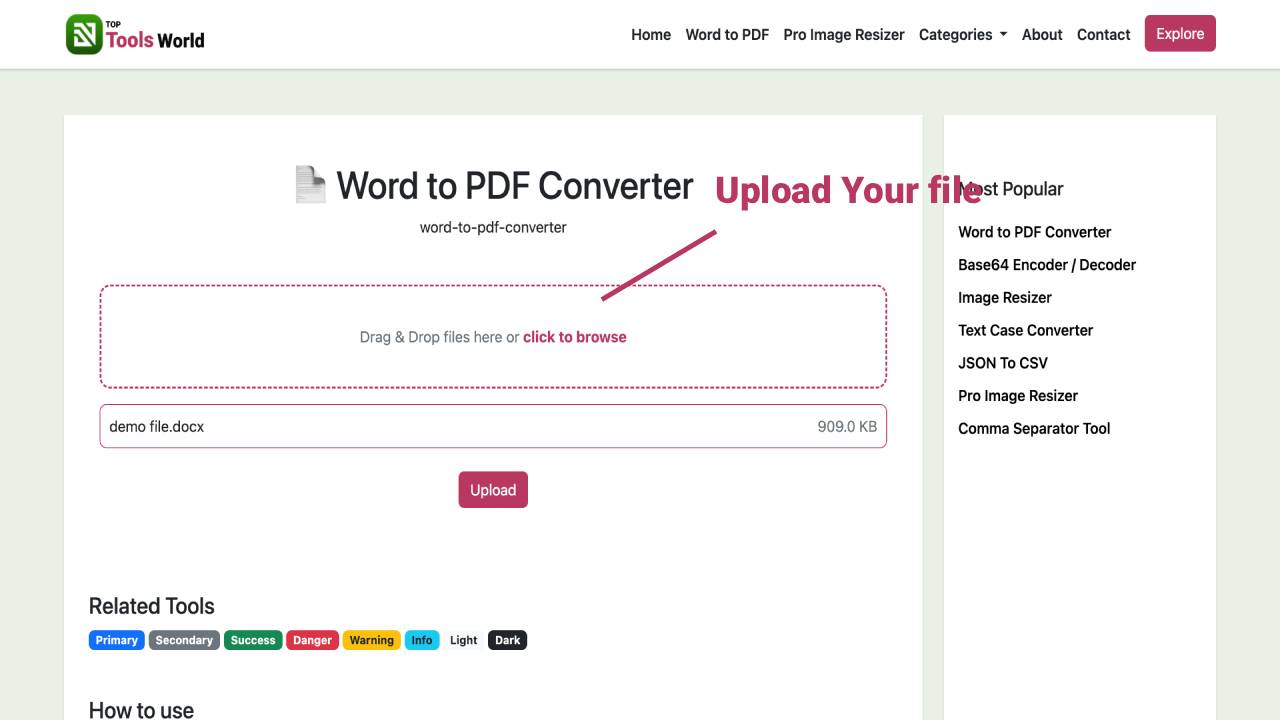
- For encoding a file: upload a document, image, or other file you want represented as Base64. This is useful when a platform requires data in text form or you need a quick Base64 version for sharing.
- For decoding: paste your Base64 string. The tool will convert it back to human-readable text or, if it represents an image, display a preview so you can visually confirm the result.
- Click Convert. The process runs quickly and you’ll get a clean, formatted output instantly.
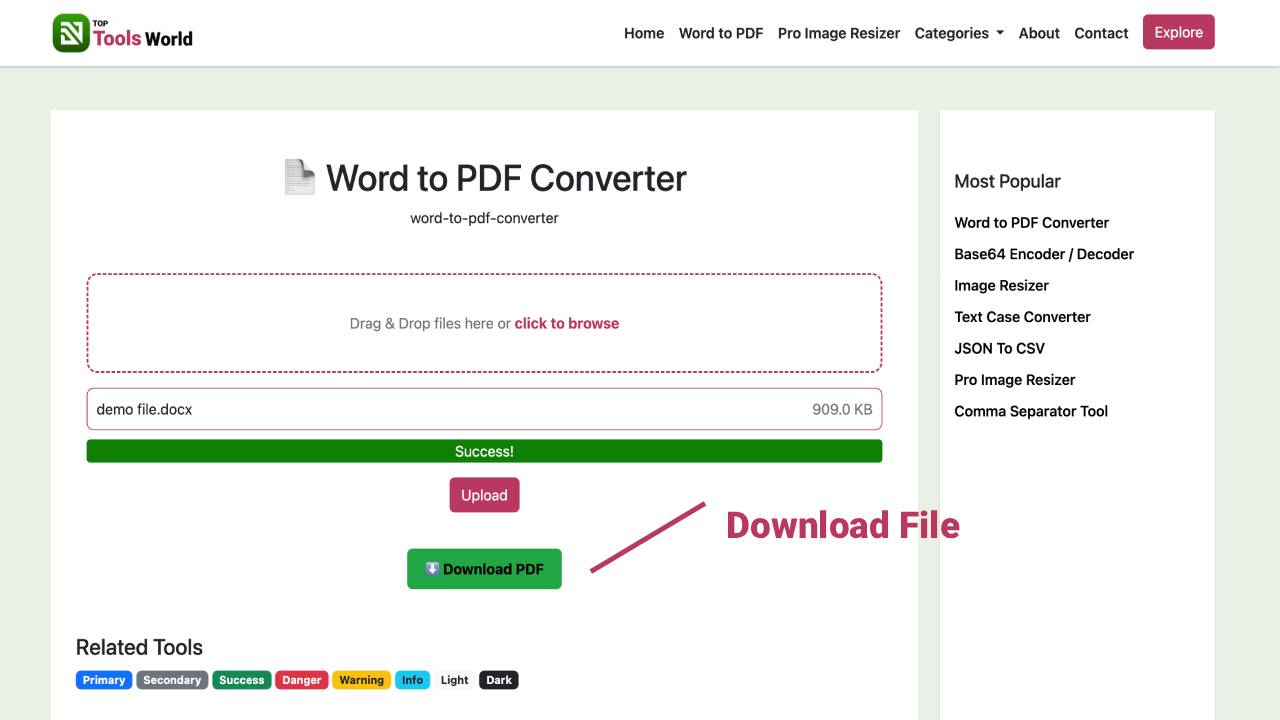
- Copy or save your result. Use the provided options to copy the Base64 output, grab the decoded text, or download the displayed result when available.
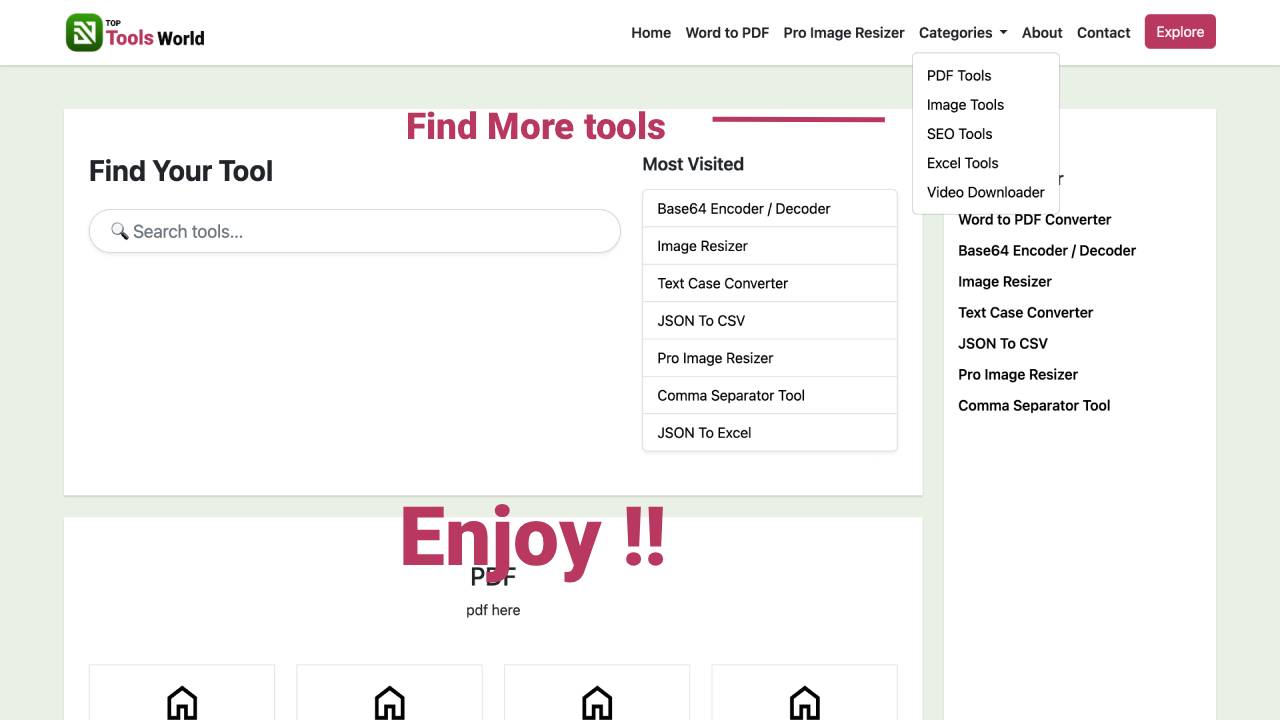
- Repeat as needed. Switch between Encode and Decode anytime and process as many items as you like. Top Tools World keeps everything straightforward for fast, repeatable workflows.
Key Benefits of Using Base64 Encoder / Decoder on Top Tools World
- Ease of use: A clear, frictionless experience that lets you convert in just a couple of clicks.
- Accuracy you can trust: Outputs follow Base64 standards, so your results work wherever you use them.
- Speed at scale: Convert small notes or larger files in moments, saving valuable time.
- Reliable results: Consistent conversions with clean formatting ensure fewer copy-paste mistakes.
- Time-saving workflow: Paste, convert, copy—no distractions, no extra steps.
- Versatile scenarios: Embed images via data URLs, move binary data through text-only channels, decode email attachments, or prepare content for testing and documentation.
- Friendly interface: Clear labels, visible actions, and results you can immediately verify—perfect for beginners and pros alike.
- Built for everyday tasks: Whether you’re preparing content for a CMS, sharing assets, or validating strings, Top Tools World makes Base64 effortless.
Why Choose Our Base64 Encoder / Decoder? (Unique Advantages)
Top Tools World delivers a refined experience that blends simplicity with reliability. Unlike cluttered converters, our tool focuses on clarity and speed so you can get in, convert, and move on. Expect smooth interactions, instant feedback, and consistently correct results—every time.
- Optimized performance: Instant conversions for text and files, with minimal waiting.
- Precision output: Standards-compliant Base64 ensures compatibility across tools and platforms.
- Thoughtful details: Helpful previews for image data and copy-ready results reduce errors.
- Trust and reliability: Top Tools World is known for straightforward utilities that work exactly as expected.
- A better everyday tool: Designed for frequent use—quick, intuitive, and dependable for teams and individuals.
What is a Base64 Encoder / Decoder? A Complete Overview
Base64 is a way to represent binary data—like images or files—using only readable characters (letters, numbers, and a few symbols). Many systems prefer text over raw binary. That’s where Base64 shines: it turns any data into a portable, text-friendly format that’s easy to copy, store, or transmit without corruption.
Encoding converts your original content (text or file) into a Base64 string. Decoding reverses the process to recover the original data. It’s especially useful when you need to:
- Embed small images or icons as data URLs so they can travel inside a single text-based document.
- Move binary content through channels that only accept text, such as certain forms, logs, or email bodies.
- Safely share snippets that might otherwise break due to special characters.
- Validate or inspect Base64 strings received from integrations, messages, or exports.
Common problems it solves include: “My attachment won’t pass through,” “This system strips binary files,” or “Special characters keep breaking my content.” With Base64, your data survives intact as a predictable text string. And when you’re ready to use the original content again, decoding restores it instantly.
Here’s a simple way to think about it: imagine your file is a photo. When encoded to Base64, it becomes a string of characters you can paste anywhere text is allowed. Paste that string back into a decoder—like this tool on Top Tools World—and the picture reappears exactly as it was.
Advanced Tips & Best Practices
- Remember: Base64 is not encryption. It’s a representation, not protection. Don’t rely on it to secure sensitive information.
- Keep inputs clean. Remove stray spaces, headers, or unrelated text before decoding to avoid errors.
- Know your prefixes. Data URLs often start with a short header (for example, indicating the media type). If present, include the entire string for best results.
- Verify large outputs. When encoding big files, copy the result carefully and confirm it pasted fully where you need it.
- Use previews wisely. If you decode an image and see a preview, confirm it looks correct before sharing or storing it.
- Consider size trade-offs. Base64 increases data size by roughly a third. It’s great for portability but not always ideal for very large assets.
- Organize your workflow. For frequent tasks, keep a small checklist: choose mode, paste or upload, convert, verify, copy. Top Tools World makes this flow fast.
FAQs About the Base64 Encoder / Decoder
1) Is Base64 the same as encryption?
No. Base64 is a way to represent data in text form. It doesn’t hide or protect content. For sensitive information, use proper security methods.
2) Can I encode files and images?
Yes. Upload a file to get a Base64 version you can copy or store. This is useful for embedding assets or moving data through text-only systems.
3) Why does my decoded output look like random symbols?
If the original content was binary (like an image or PDF), the decoded result isn’t meant to be readable text. You’ll need to view it with the appropriate app or use the preview when available.
4) What does a data URL mean in Base64?
It’s a Base64 string with a short header that identifies the content type (such as an image). Decoding will restore the original content, and previews help confirm it visually.
5) Is there a size limit?
Very large inputs may take longer to process and can be heavy to copy and paste. For routine tasks, smaller files and shorter strings are more manageable.
6) Will line breaks or spaces break my Base64?
Most Base64 tools—including Top Tools World—handle typical whitespace safely. Still, it’s best to use clean, continuous strings for consistency.
7) Can I use the tool on mobile?
Yes. Top Tools World is designed to be accessible and user-friendly on modern devices, so you can convert wherever you are.
Whether you’re preparing content for a platform, embedding small assets, or verifying a string, the Base64 Encoder / Decoder on Top Tools World gives you quick, accurate, and reliable results. Keep this page bookmarked and make Base64 conversions a one-step task with Top Tools World.