Excel To JSON
Convert .xls/.xlsx to clean JSON instantly. Fast, accurate, and free on Top Tools World.
How to use
Last updated: a year ago
Step-by-Step Guide to Using the Excel To JSON
- Get your spreadsheet ready. Keep the first row as clear, descriptive column names and avoid merged cells for the smoothest conversion.
- Double-check your data. Remove empty columns you don’t need, fix obvious typos, and keep formats consistent (for example, use the same date style throughout).
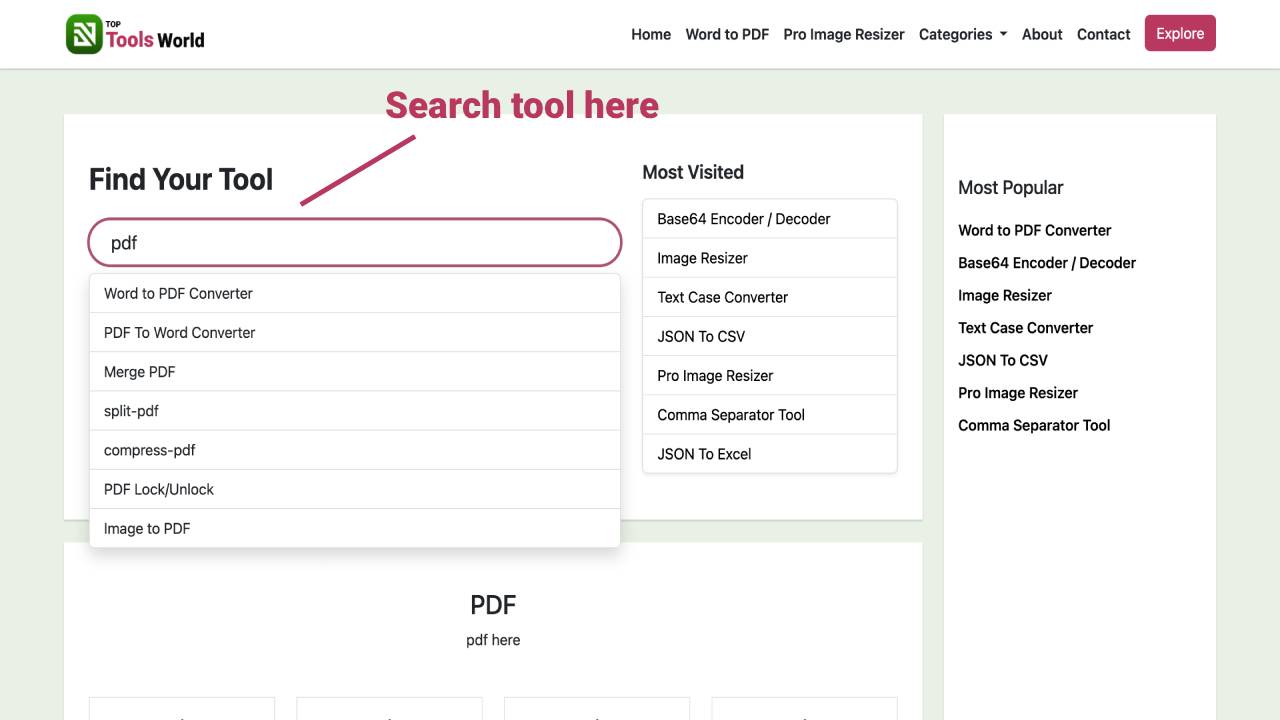
- Visit the Excel To JSON page on Top Tools World. You’ll see a simple, distraction-free interface designed for quick, reliable conversions.
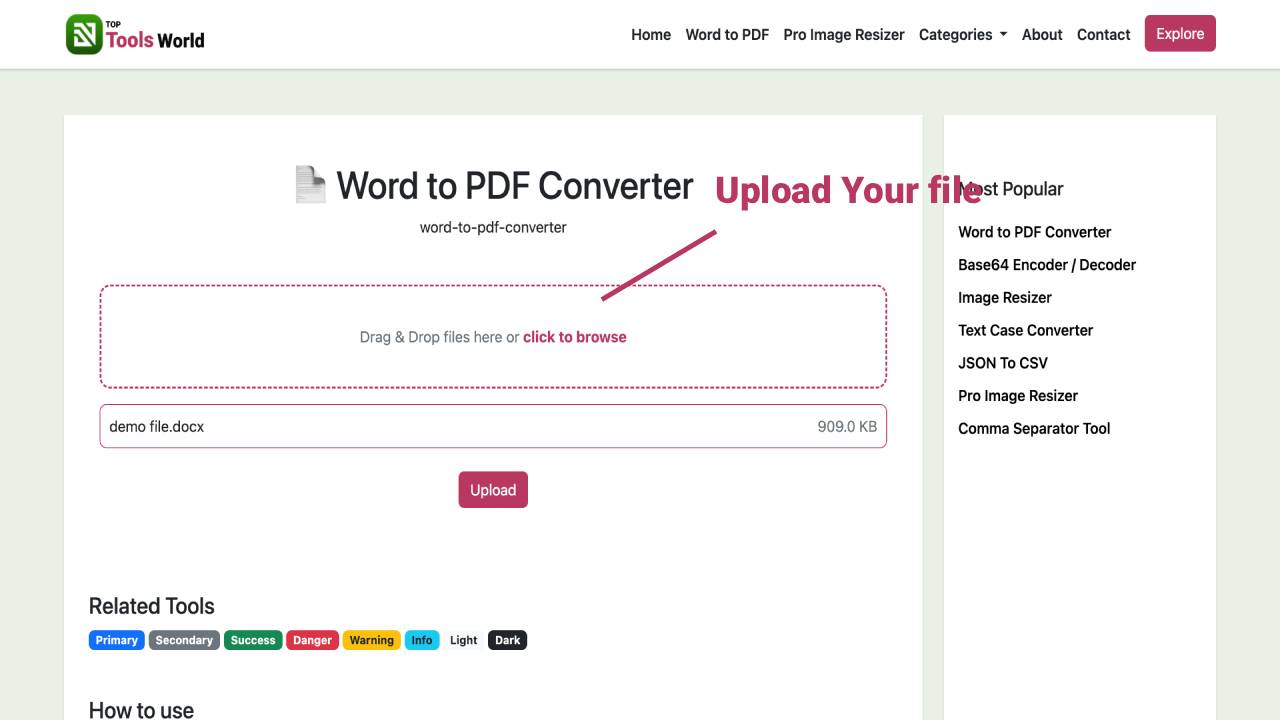
- Select your Excel file. Click the upload area and choose a .xls or .xlsx file from your computer.
- Confirm you picked the correct file. If your workbook contains multiple sheets, make sure the sheet you intend to convert is the one prepared for export.
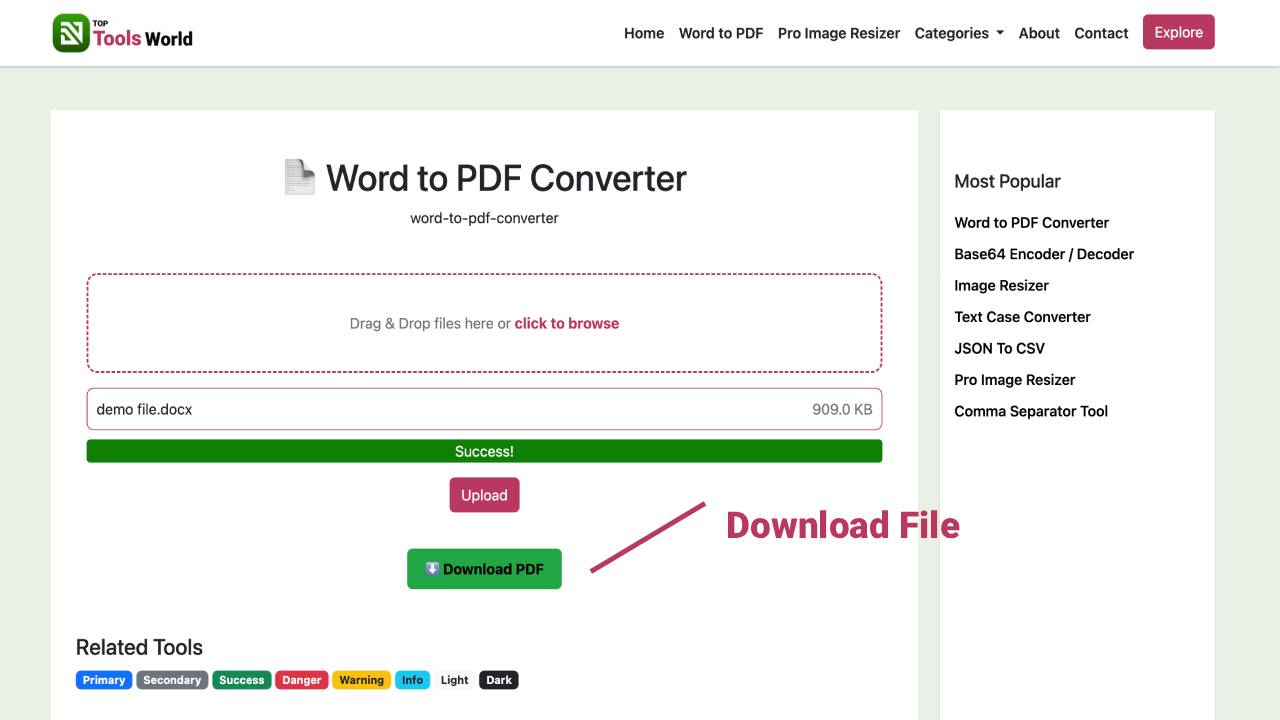
- Start the conversion by clicking the main action button. The tool immediately begins processing your spreadsheet into structured JSON.
- Watch the progress indicator. This gives you a quick sense of when the conversion will complete, even with larger files.
- Review your JSON output on the page. The result is neatly formatted so you can skim the first few and last few entries to confirm everything looks right.
- Copy your result. Use the visible copy option to place the JSON into your clipboard for effortless pasting into any app or workflow.
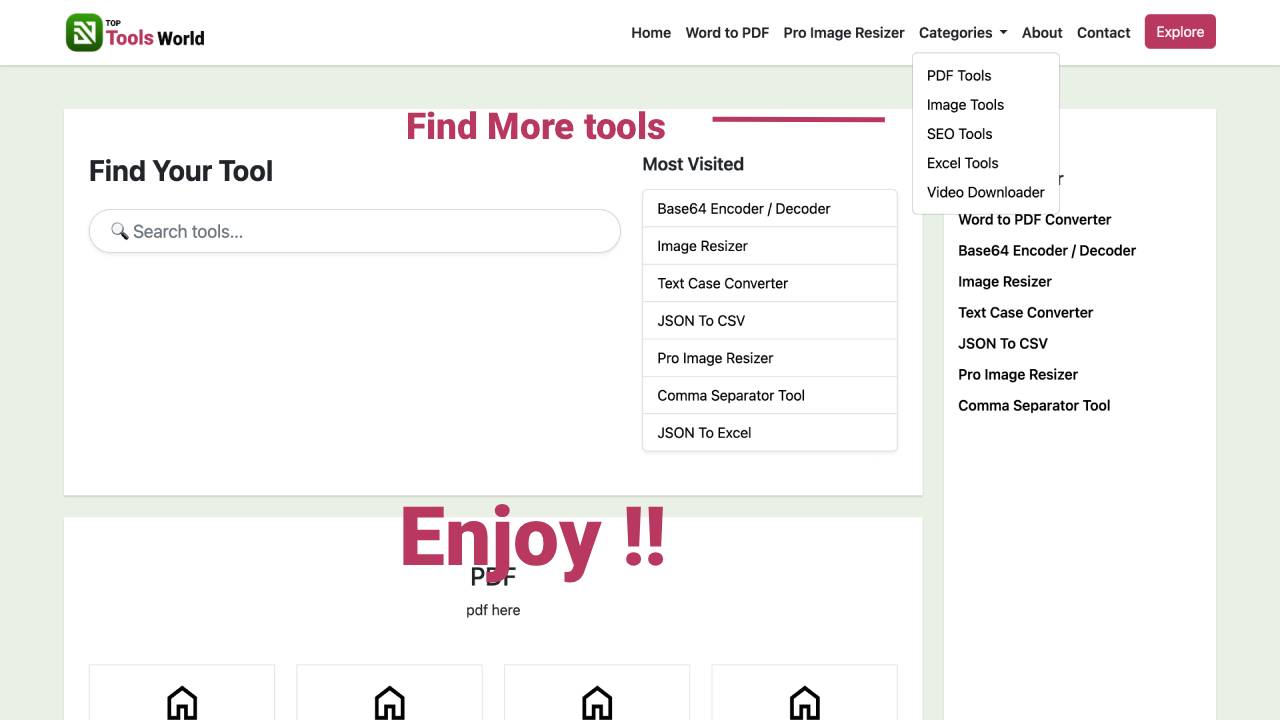
- Convert another file if needed. You can repeat the steps for other spreadsheets to maintain a consistent, automated workflow.
Key Benefits of Using Excel To JSON on Top Tools World
- Ease of use: A clean interface that guides you from upload to output in a few clicks.
- Accuracy: Column names become intuitive data labels, helping preserve structure and meaning.
- Speed: Even large spreadsheets convert quickly, reducing waiting time.
- Reliability: Consistent, stable results powered by proven processing on Top Tools World.
- Time-saving: Eliminate manual reformatting and copy-paste errors from spreadsheets.
- Clarity: Pretty-printed JSON makes it simple to review and share immediately.
- Scenarios that shine: Create product feeds, migrate contact lists, prepare content catalogs, or structure survey results for digital tools.
- Seamless sharing: Copy-ready output means you can paste directly where you need it.
Why Choose Our Excel To JSON? (Unique Advantages)
Top Tools World is built for professionals who want speed, certainty, and consistency. Our Excel To JSON emphasizes clarity and usability so you can move from spreadsheet to structured data without friction.
- Superior experience: Minimal clicks, instant feedback, and a streamlined layout that keeps you focused.
- Advanced features that matter: Clean, readable output that preserves order and labels, reducing post-conversion edits.
- Accuracy and performance: Thoughtful handling of common spreadsheet quirks to keep your data aligned and dependable.
- Trust and reliability: Top Tools World is widely used for everyday data tasks, and users value its stable, predictable results.
- Preferred by teams: The combination of speed, clarity, and copy-ready output makes it an ideal choice for marketers, analysts, and content managers.
When you need to turn rows and columns into a structured, portable format, Top Tools World gives you a dependable, repeatable process that just works.
What is a Excel To JSON? A Complete Overview
Excel To JSON is a converter that transforms spreadsheet data into JSON, a widely used text format that represents structured information with labels and values. Think of it as reshaping your grid of rows and columns into a well-organized list of entries that any modern application can understand.
Why is this helpful? Spreadsheets are fantastic for editing, sorting, and analyzing information, but many tools expect structured text for import or configuration. JSON is perfect for that—it’s lightweight, readable, and easy to share. By converting Excel to JSON, you can move product catalogs, editorial calendars, event schedules, inventory lists, or survey responses into digital systems with minimal manual work.
Common problems it solves:
- Manual retyping: Copying data field-by-field is slow and error-prone. Conversion eliminates repetitive tasks.
- Inconsistent formatting: The converter aligns columns and rows, keeping structure intact and labels consistent.
- Sharing data: JSON is portable and easy to paste, attach, or store. You get a single, clean output you can reuse anywhere.
- Onboarding datasets: When setting up new tools, JSON acts as a universal bridge from spreadsheets to structured inputs.
Easy-to-understand example: Imagine a sheet with columns like Name, Price, and In Stock. After conversion, each row becomes a tidy entry with those labels and the corresponding values. You can quickly paste that JSON into various tools to populate a list of items without copying each cell manually.
That’s the essence of Excel To JSON on Top Tools World: turn everyday spreadsheets into organized, easy-to-handle data that flows wherever you need it.
Advanced Tips & Best Practices
- Use a clear header row: Short, descriptive column names become friendly labels in your JSON.
- Avoid merged cells: They can complicate structure; unmerge before converting.
- Keep types consistent: Don’t mix text and numbers within the same column; pick one format and stick to it.
- Standardize dates: Choose one readable format (for example, YYYY-MM-DD) for uniform results.
- Trim extra spaces: Remove trailing spaces and line breaks in cells to prevent unexpected characters.
- Remove blank columns: If a column is empty, delete it to keep your output lean and clean.
- Convert per sheet: If your workbook contains different datasets, convert each sheet separately for clarity.
- Spot-check the output: Scan the first and last few entries to verify names, numbers, and dates look correct.
- Split huge files: If a spreadsheet is very large, consider dividing it into logical chunks for faster processing.
- Name columns for clarity: Prefer Product_Name over ambiguous labels like PN; you’ll thank yourself later.
Follow these tips and you’ll get consistently clean, ready-to-use JSON from Top Tools World every time.
FAQs About the Excel To JSON
- Which file types are supported? The tool works with common Excel formats, including .xls and .xlsx.
- What happens to empty cells? Empty cells are included as empty values, helping preserve the original row structure.
- Can I convert multiple sheets at once? For the best clarity, prepare and convert one dataset at a time. If you have multiple sheets, convert them separately.
- Is there a file size limit? For smoother performance, keep files reasonably sized. If needed, split very large spreadsheets into parts.
- Will the order of rows be preserved? Yes, the output follows your spreadsheet’s row order so lists remain predictable.
- How can I make sure numbers stay as numbers? Format numeric columns consistently in Excel before converting and avoid mixing numbers with text in the same column.
- Is the tool free to use? Yes, you can use Excel To JSON on Top Tools World without barriers, making it ideal for quick, frequent conversions.
- Why do I see unusual characters in the result? This often comes from irregular characters in the spreadsheet. Clean those entries and reconvert for crisp output on Top Tools World.
- Can I edit the JSON after conversion? Absolutely. Copy the result, make any quick adjustments you need, and save it for your workflow.
Whether you’re managing catalogs, organizing content, or preparing lists for digital tools, Top Tools World makes Excel to JSON conversion intuitive, fast, and dependable. Start with a clean spreadsheet, follow the simple steps above, and enjoy accurate results you can trust on Top Tools World—every time.