📄 PNG To JPEG
Fast PNG to JPEG conversion with quality control and optional metadata removal.
How to use
Last updated: a year ago
Step-by-Step Guide to Using the PNG To JPEG
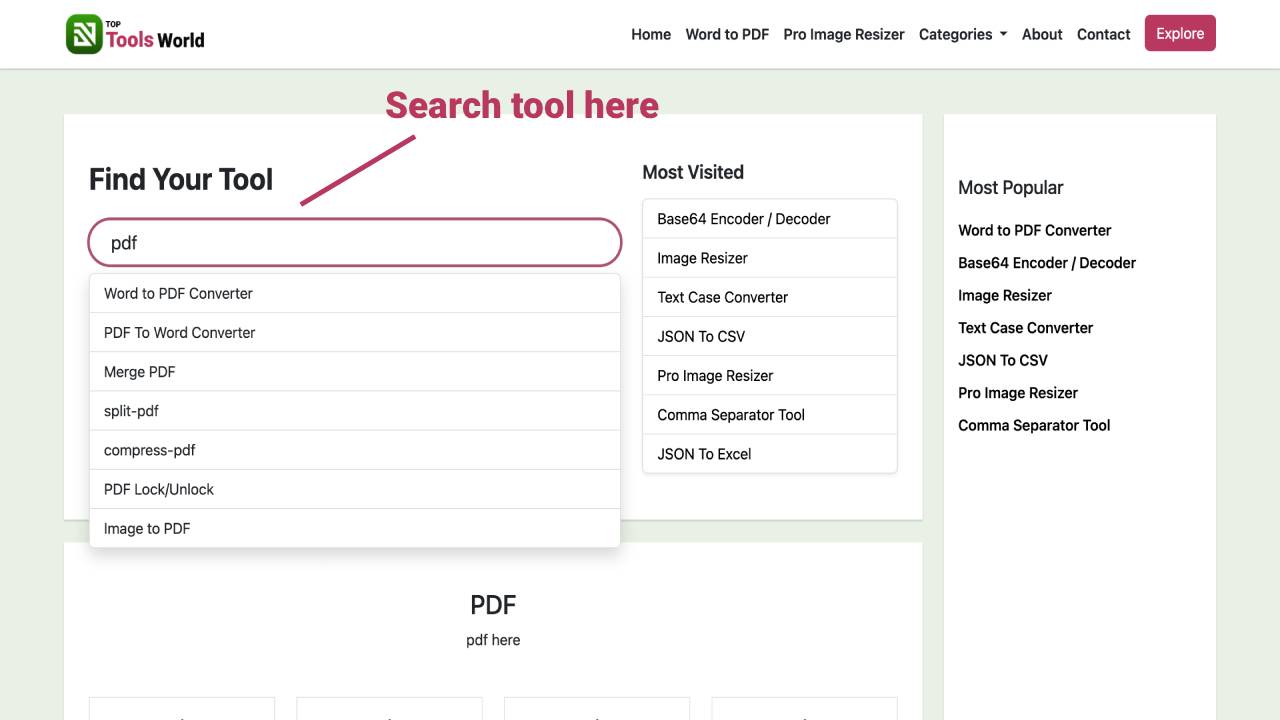
- Open the PNG To JPEG tool on Top Tools World. You’ll see a clean workspace that lets you focus on a quick, high-quality conversion.
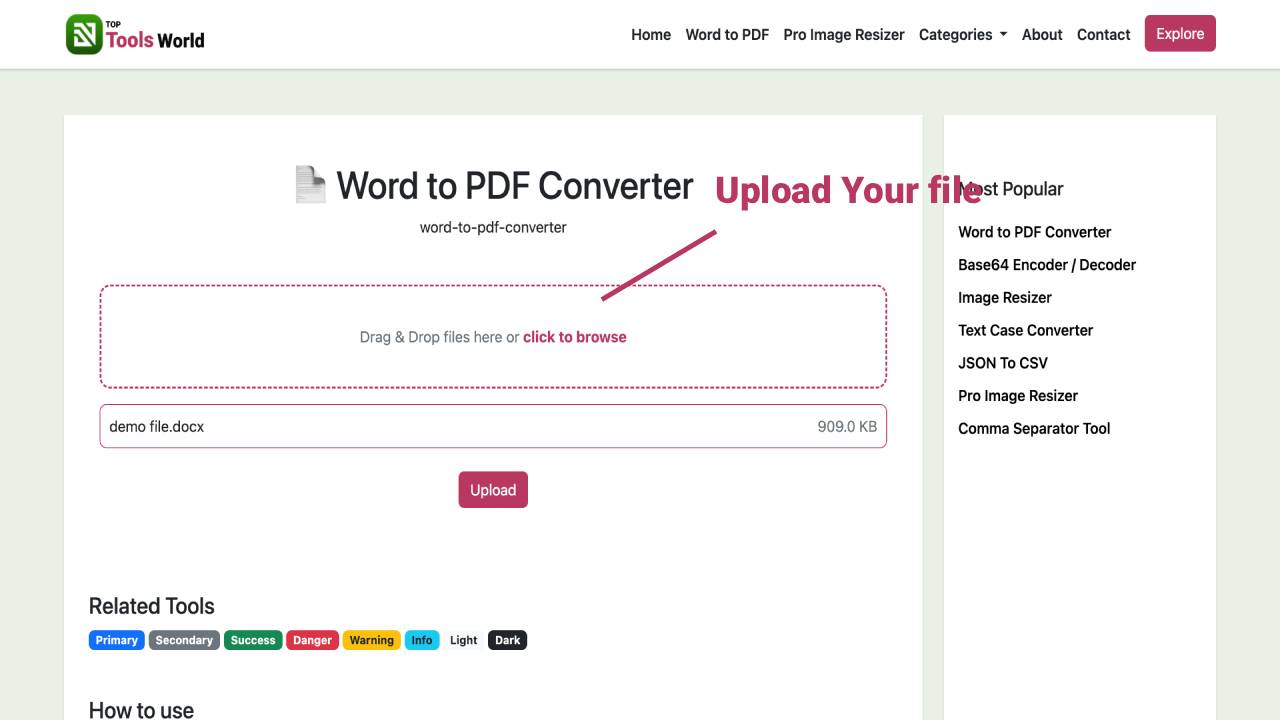
- Select your image. Click the option to upload a PNG file from your device. Choose the image you want to convert, such as a logo, infographic, or screenshot.
- Set your preferred JPEG quality. Adjust the percentage to balance file size and clarity: higher values keep more detail, lower values produce smaller files.
- Choose whether to remove metadata. Turning this on can reduce file size and strip private details like camera data or location tags.
- Start the conversion. Confirm your choices and begin processing. The tool quickly transforms your PNG into a JPEG while preserving key visual details.
- Review your results. You’ll see helpful information like the original size, the new size, how much space you saved, and which quality setting was used.
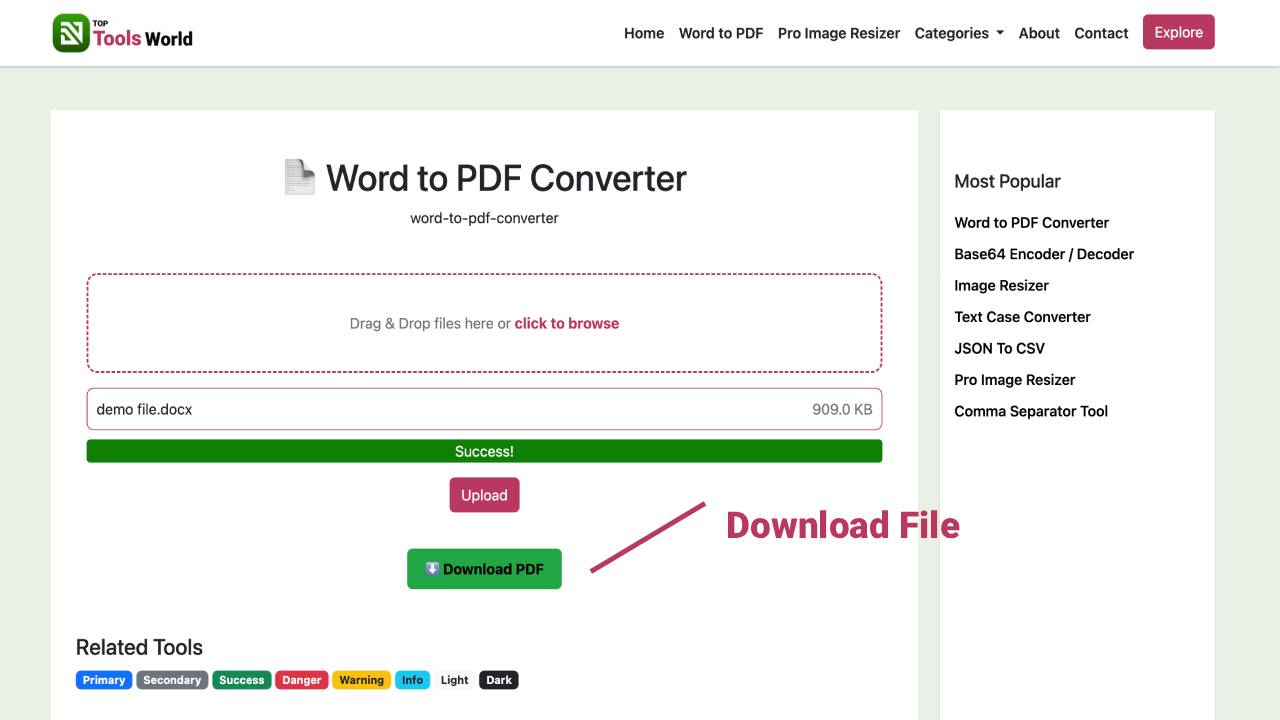
- Preview and download. Check the converted image and then save the JPEG to your device for use on websites, emails, documents, or social media.
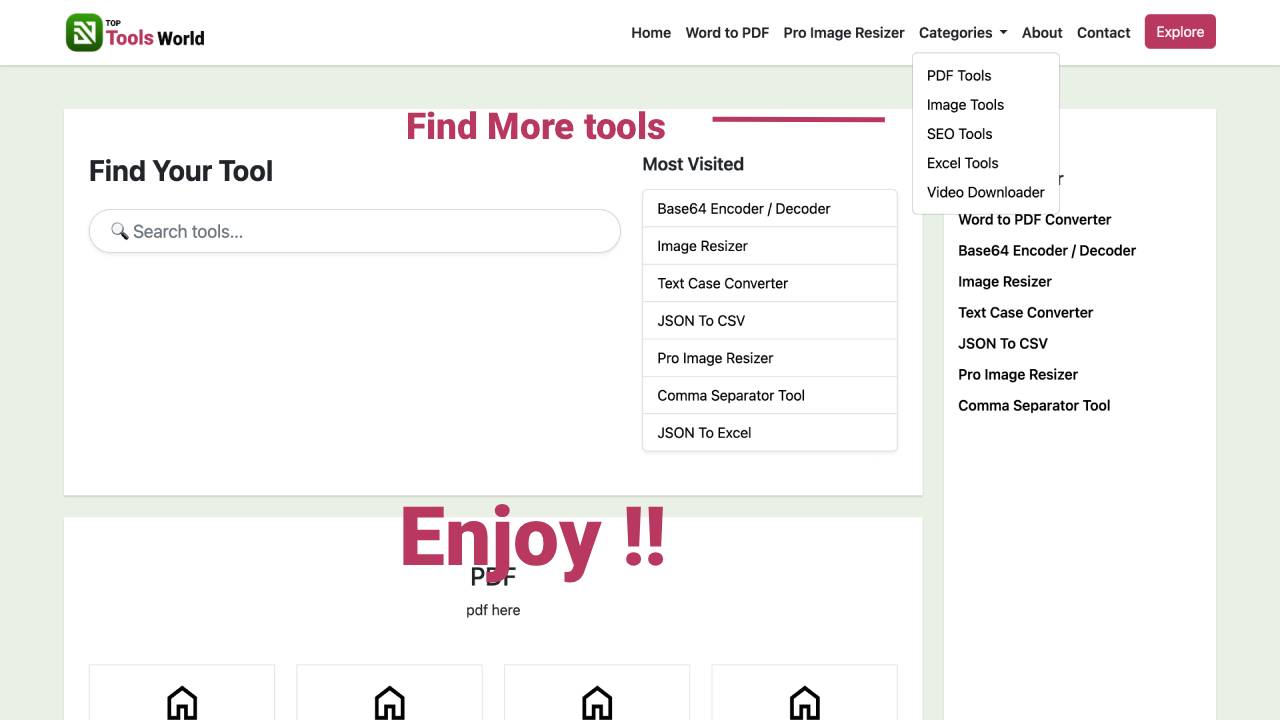
- Convert more images. Need another file? Repeat the process with the next PNG to keep your workflow smooth and consistent.
Key Benefits of Using PNG To JPEG on Top Tools World
- Ease of use: Simple steps from upload to download—no learning curve.
- Accuracy: Smart conversion preserves color and detail to match your needs.
- Speed: Optimized processing delivers results in seconds, even for large images.
- Reliability: Consistent output you can trust for professional work.
- Time-saving: Convert and optimize in one place—no extra software required.
- Flexible quality control: Fine-tune JPEG quality to meet platform requirements.
- Privacy-friendly: Remove metadata to cut size and protect sensitive information.
- Web-ready results: Smaller JPEGs load faster, improving user experience and SEO.
- Versatile use cases: Perfect for blog images, product photos, email attachments, and social posts.
- Clear insights: See original vs. new size and savings to make informed choices next time.
Whether you’re optimizing a portfolio, speeding up a landing page, or preparing client deliverables, this converter keeps your workflow efficient—one reason creators and teams choose Top Tools World.
Why Choose Our PNG To JPEG? (Unique Advantages)
At Top Tools World, we focus on clarity and performance. This converter is designed to give you precise control over output quality while keeping the process effortless. You get fast results, transparent size savings, and a preview you can trust before downloading.
- Advanced control: Adjust JPEG quality to match your use case—from lightweight web images to crisp presentations.
- Metadata management: Remove hidden data to reduce file size and support privacy best practices.
- Consistent performance: Optimized processing delivers dependable results for single images or repeat workflows.
- Professional polish: Balanced compression helps maintain clean edges, readable text, and natural colors.
- Accessible anywhere: Works in your browser, on desktop or mobile, without extra installations.
The Top Tools World PNG To JPEG prioritizes speed without sacrificing visual integrity, making it a dependable tool for marketers, designers, students, and site owners alike.
What is a PNG To JPEG? A Complete Overview
A PNG To JPEG converter transforms images from the PNG format to the JPEG format. PNG is a lossless format that supports transparency, making it ideal for icons, logos, and graphics with sharp edges. JPEG is a lossy format designed for smaller file sizes and broad compatibility, perfect for photos, blog images, and social sharing.
Why convert? PNG files can be large, slowing down websites and making emails heavier. Many platforms prefer JPG/JPEG for faster loading and universal support. Converting reduces size while keeping the image visually appealing. Using Top Tools World’s converter, you can control the quality level, remove metadata for privacy and size savings, and quickly download a ready-to-use JPEG.
Common problems solved include heavy image files that hurt page speed, apps that require JPG uploads, and the need to compress images without downloading complex software. For example, a 2 MB PNG hero image can often be reduced to a few hundred kilobytes as a JPEG—improving load times and user experience without noticeable quality loss.
Note: JPEG does not support transparency. Transparent areas in a PNG will appear with a solid background in the result. If you need a specific background color, add it to your PNG before converting.
Advanced Tips & Best Practices
- Pick the right quality: 60–80% is a great balance for web use; 80–90% suits photos needing more detail; 40–60% works for thumbnails.
- Remove metadata for lighter files: Stripping EXIF and other metadata saves space and helps protect privacy without affecting visual quality.
- Mind transparency: Because JPEG doesn’t support it, add a white or brand-colored background to your PNG before conversion if needed.
- Resize before converting: If the image is larger than necessary, reduce its dimensions in your editor first to maximize savings.
- Compare results: Check the reported size savings and preview. If needed, adjust quality and reconvert for the perfect balance.
- Keep an original: Store the PNG as a master file. Use the JPEG for distribution and web publishing.
- Consistent branding: For product photos or catalogs, stick to a standard quality range so your visuals look uniform.
- Optimize for platforms: Social feeds and emails benefit from smaller files; presentations can handle higher quality for sharpness.
- Bookmark this page on Top Tools World to keep your workflow fast and repeatable.
FAQs About the PNG To JPEG
- How do I convert PNG to JPEG on Top Tools World?
Upload your PNG, choose a quality percentage, optionally remove metadata, start the conversion, preview the result, and download the JPEG. - Will transparency be preserved?
No. JPEG doesn’t support transparency. Transparent areas will become solid. Add a background color to your PNG before converting if required. - What JPEG quality should I choose?
For most web images, 60–80% is ideal. Use 80–90% for photos where detail matters, and 40–60% for small thumbnails or quick previews. - Does removing metadata affect image quality?
No. Metadata removal only deletes hidden information (like camera or location data). Visual quality stays the same and file size often shrinks. - Can I convert multiple images at once?
Convert images one by one and repeat as needed. This helps you fine-tune quality for each file. - Is my image safe when using this tool?
Always use trusted tools and avoid uploading sensitive content. Top Tools World focuses on a professional, user-first experience to help you work efficiently and confidently.