📄 Redirect Checker
Trace 301/302/307/308 redirect chains and see the final URL instantly.
How to use
Last updated: a year ago
Step-by-Step Guide to Using the Redirect Checker
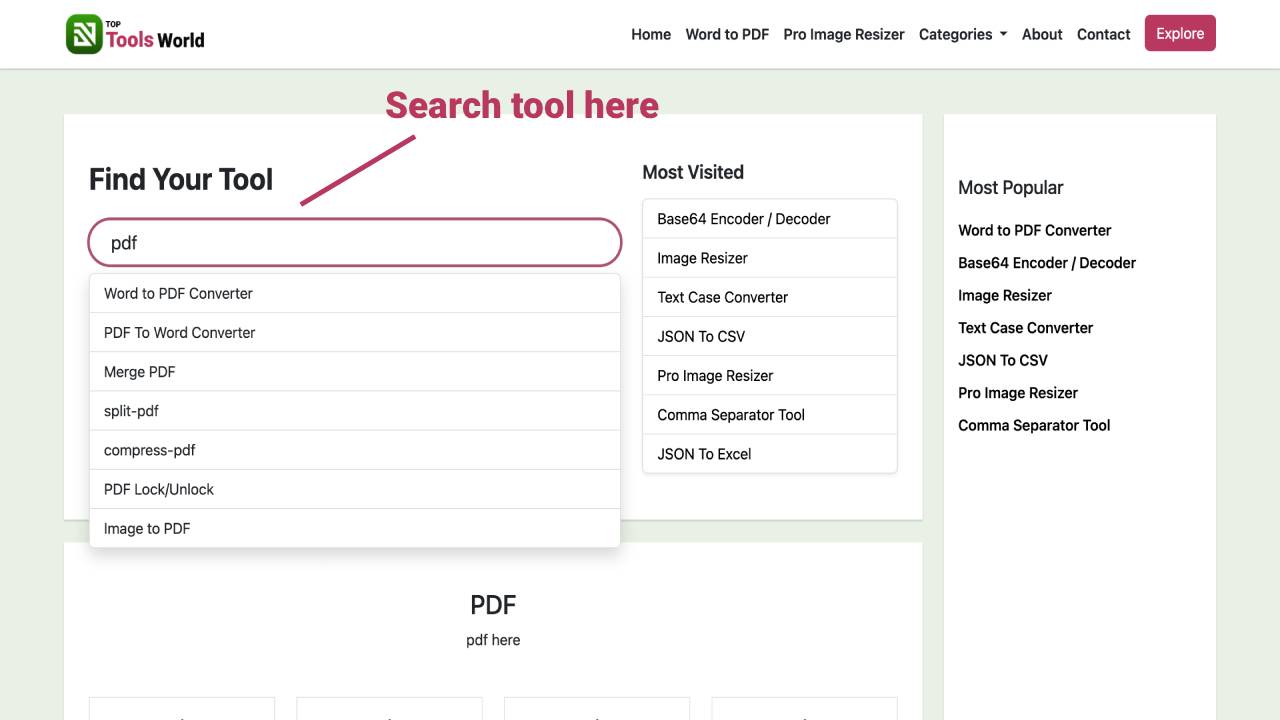
- Open the Redirect Checker on Top Tools World. You will see a clean, distraction-free interface ready for a quick check.
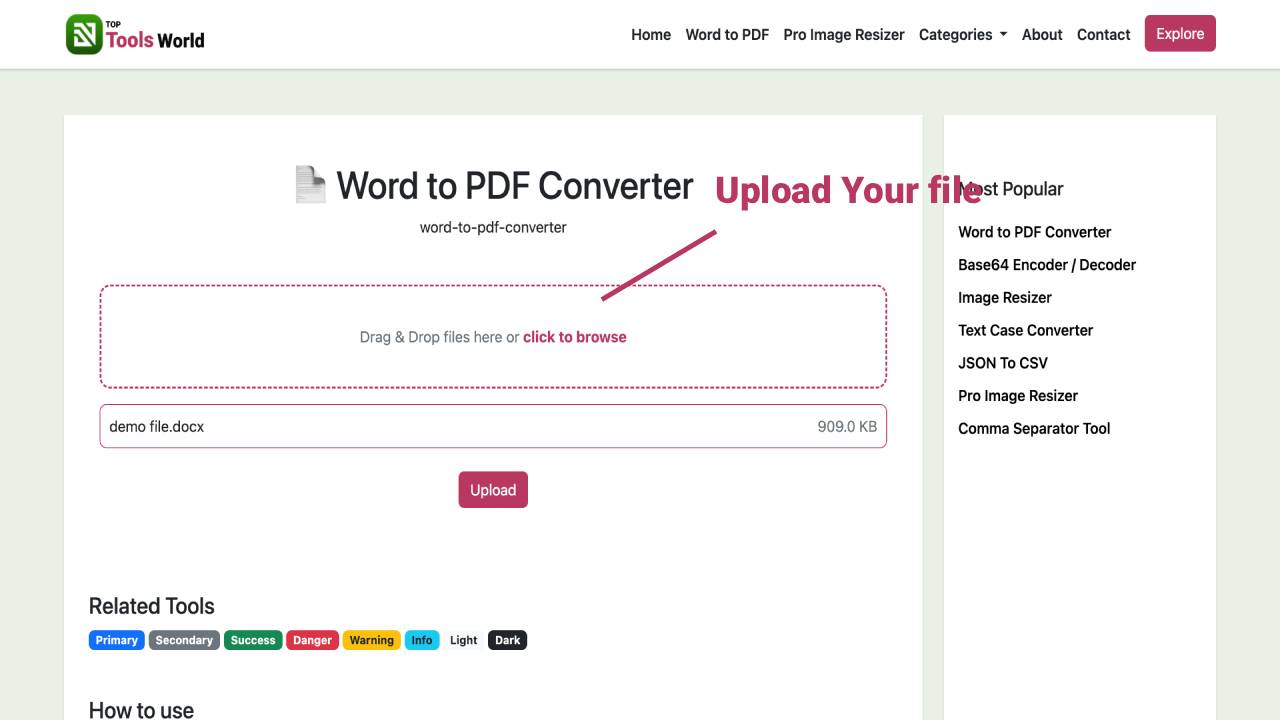
- Paste the link you want to examine into the main input area. You can use any URL, including shortened links, old pages, or campaign URLs with tracking tags.
- Click the Convert button to start the scan. The tool immediately begins tracing every hop between your starting link and the final destination.
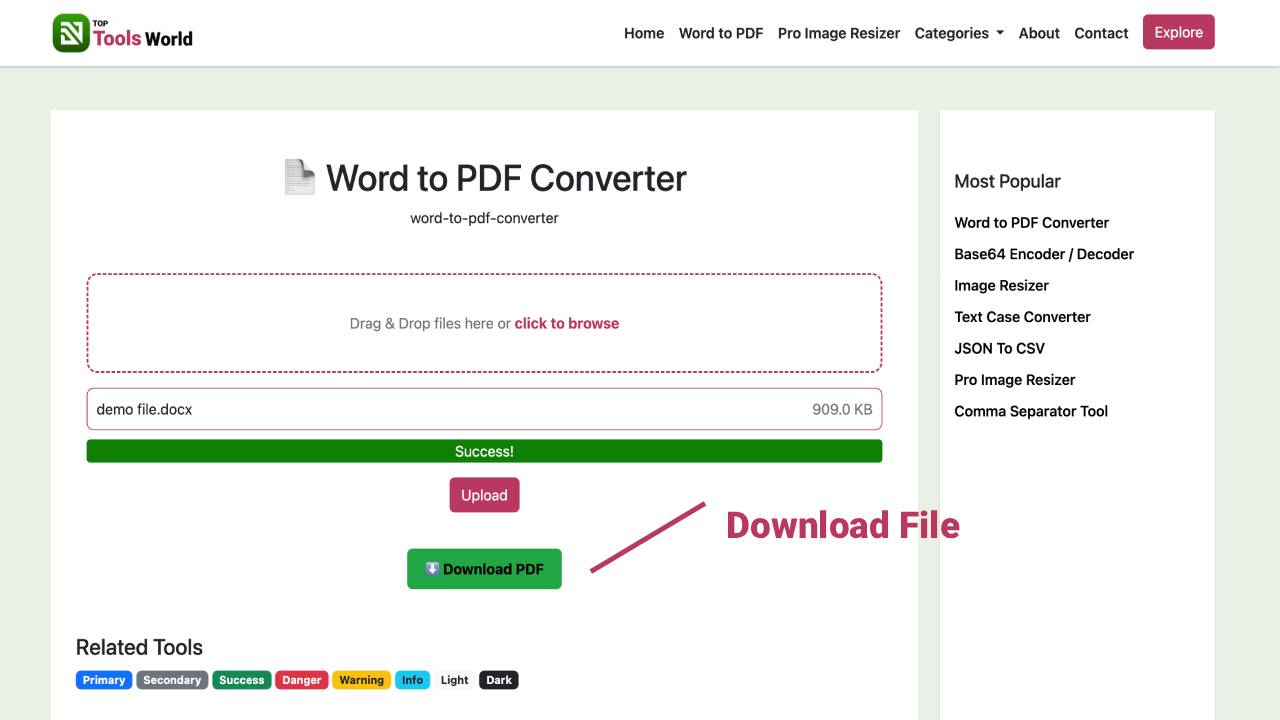
- Watch the progress indicator. It will keep you informed as each redirect is discovered, so you know the tool is actively working.
- Review the results. You will see each step in the chain with its HTTP status (such as 301, 302, 307, or 308) and the final landing page. This makes it simple to understand how a user or crawler travels from the starting URL to the end.
- Identify quick wins. Look for unnecessary hops, temporary redirects used permanently, or mismatched protocols (http vs https). These are common issues that can be fixed to improve performance and SEO.
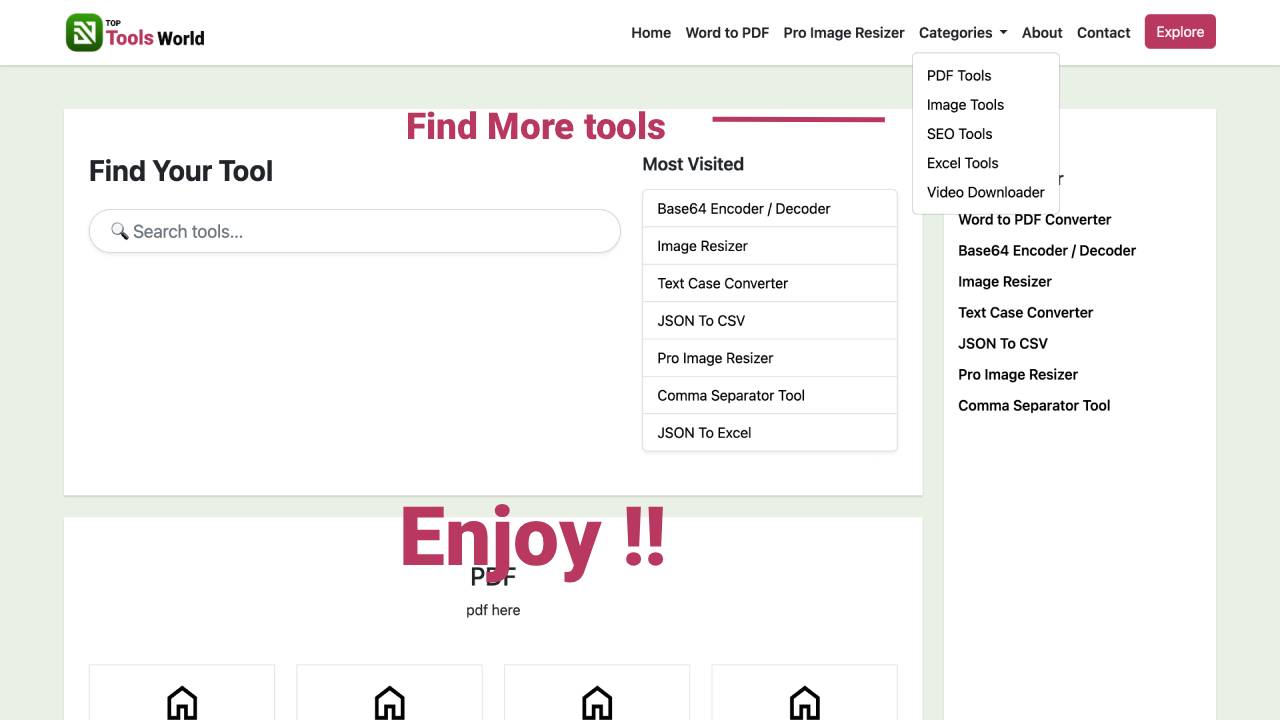
- Copy or save the output as a record. Keep it for audits, share it with your team, or include it in a migration or QA checklist for your website.
- Test variations. Check www and non-www, http and https, and URLs with and without trailing slashes to ensure your preferred format consistently resolves in one hop.
Key Benefits of Using Redirect Checker on Top Tools World
Our Redirect Checker prioritizes clarity, speed, and accuracy so you can troubleshoot links and optimize user journeys with confidence.
- Ease of use: Paste a link, click once, and get a complete redirect trace in seconds.
- Accuracy you can trust: Clear HTTP status codes for every step ensure your decisions are based on reliable data.
- Blazing fast checks: Instantly see the path from source to destination, even for complex redirect chains.
- Reliable output: Consistent results help you compare before-and-after states during site updates.
- Time-saving workflow: Audit URLs quickly without switching tools or running manual tests in multiple browsers.
- Fits many scenarios: Ideal for site migrations, HTTPS upgrades, URL restructures, affiliate links, short links, and campaign tracking.
- Friendly language: Results are human-readable, making it easy to share findings with stakeholders and clients.
Whether you are validating a marketing link or auditing a full domain, Top Tools World helps you move from problem to solution faster.
Why Choose Our Redirect Checker? (Unique Advantages)
Top Tools World is built to deliver a superior experience for marketers, SEOs, and site owners. The Redirect Checker presents a clear, step-by-step trace so you can spot weak points immediately. You will see how many hops occur, which status codes are used, and exactly where the journey ends.
Advanced features include transparent status reporting for common redirect types, final URL summarization to confirm the destination, and intuitive presentation that requires no technical background. The tool is optimized for performance, so you can run multiple checks during audits without slowing down your workflow.
Why users prefer this tool: dependable results, a clean interface, and actionable insights. Top Tools World focuses on practical details that matter, helping you cut redirect bloat, preserve link equity, and reduce user friction.
What is a Redirect Checker? A Complete Overview
A redirect checker reveals the full path a browser or search engine follows when a URL sends visitors somewhere else. Redirects are common when pages move, websites migrate to HTTPS, or campaigns use link shorteners and tracking parameters. The tool exposes each hop, the status code used, and the final page where traffic lands.
Typical status codes include 301 (permanent), 302 (temporary), 307 (temporary, method preserved), and 308 (permanent, method preserved). Understanding these codes matters because they affect SEO signals, caching, and how quickly users reach content. For example, a 301 indicates a permanent change and typically passes most link equity, while a 302 is temporary and may not be ideal for long-term moves.
Common problems it solves:
- Redirect chains: Multiple unnecessary hops slow down users and crawlers and may dilute ranking signals.
- Incorrect status choice: Using a 302 when a 301 is warranted can confuse search engines and delay consolidation.
- Mixed protocols: Sending users from http to https and back again creates friction and potential security warnings.
- Inconsistent www settings: www to non-www (or vice versa) conflicts lead to duplication and index bloat.
- Outdated destination pages: Links pointing to retired URLs can loop or end in non-ideal destinations.
Simple examples:
- Old blog URL to new article: The tool shows one clean 301 hop to the new address, confirming best practice.
- Shortened campaign link: See how a bitly-style link jumps through a tracker and lands on the final page.
- HTTPS migration: Verify that all legacy http pages resolve to the secure version in a single, permanent hop.
By making these journeys visible, Top Tools World empowers you to streamline navigation, protect SEO value, and deliver a faster experience.
Advanced Tips & Best Practices
- Aim for one hop: Keep the journey from the original URL to the destination as short as possible to reduce latency and preserve link equity.
- Use permanent redirects for permanent moves: Prefer 301 or 308 when consolidating or retiring URLs.
- Test protocol and host variations: Check http vs https, www vs non-www, and trailing slash changes to enforce a single canonical route.
- Validate campaigns and affiliates: Always test shortened or tagged links to ensure they resolve cleanly and keep UTM parameters intact.
- Audit during migrations: Before and after launching redirects, run batches of priority URLs through the checker to catch chains and loops.
- Monitor top pages regularly: Re-check high-traffic pages, cornerstone content, and backlink targets to guard against regressions.
- Document outcomes: Save the output as proof of fixes and to guide future QA. With Top Tools World, you can quickly repeat checks after changes.
FAQs About the Redirect Checker
1) What is a redirect chain and why does it matter?
A redirect chain occurs when a URL passes through multiple hops before reaching the final page. Chains increase load times and can dilute SEO signals. Reduce them to one hop wherever possible.
2) What is the difference between 301 and 302?
301 is permanent and is best for long-term moves, typically passing most link equity. 302 is temporary and is suitable for short-term changes or tests.
3) How many redirects are too many?
As a rule of thumb, aim for a single hop. Two may be acceptable temporarily, but more than that can slow users and harm SEO.
4) Can the tool detect redirect loops?
Yes. If a URL leads back to itself or cycles among a set of URLs, the checker will reveal the pattern so you can fix it.
5) Does it work with link shorteners like bitly or t.co?
Absolutely. The Redirect Checker traces shortened and tracking links to show each hop and the final destination.
6) Are the results real-time?
Yes, the trace reflects the live response of the URL at the moment you run the check on Top Tools World.
7) Will using the Redirect Checker change my site?
No. It is a non-intrusive diagnostic tool. It only fetches and reports the path; it does not alter your website.
8) What should I do if a permanent link uses a 302?
Update it to a 301 (or 308) to signal permanence and help search engines consolidate signals to the correct destination.
Use the Redirect Checker on Top Tools World anytime you need clarity on where a link goes, how it gets there, and how to improve the path for both users and search engines. With Top Tools World, you get accuracy, speed, and confidence built into every check.